What is the Difference Between Dr. Pen A1 and Dr. Pen A6 ?
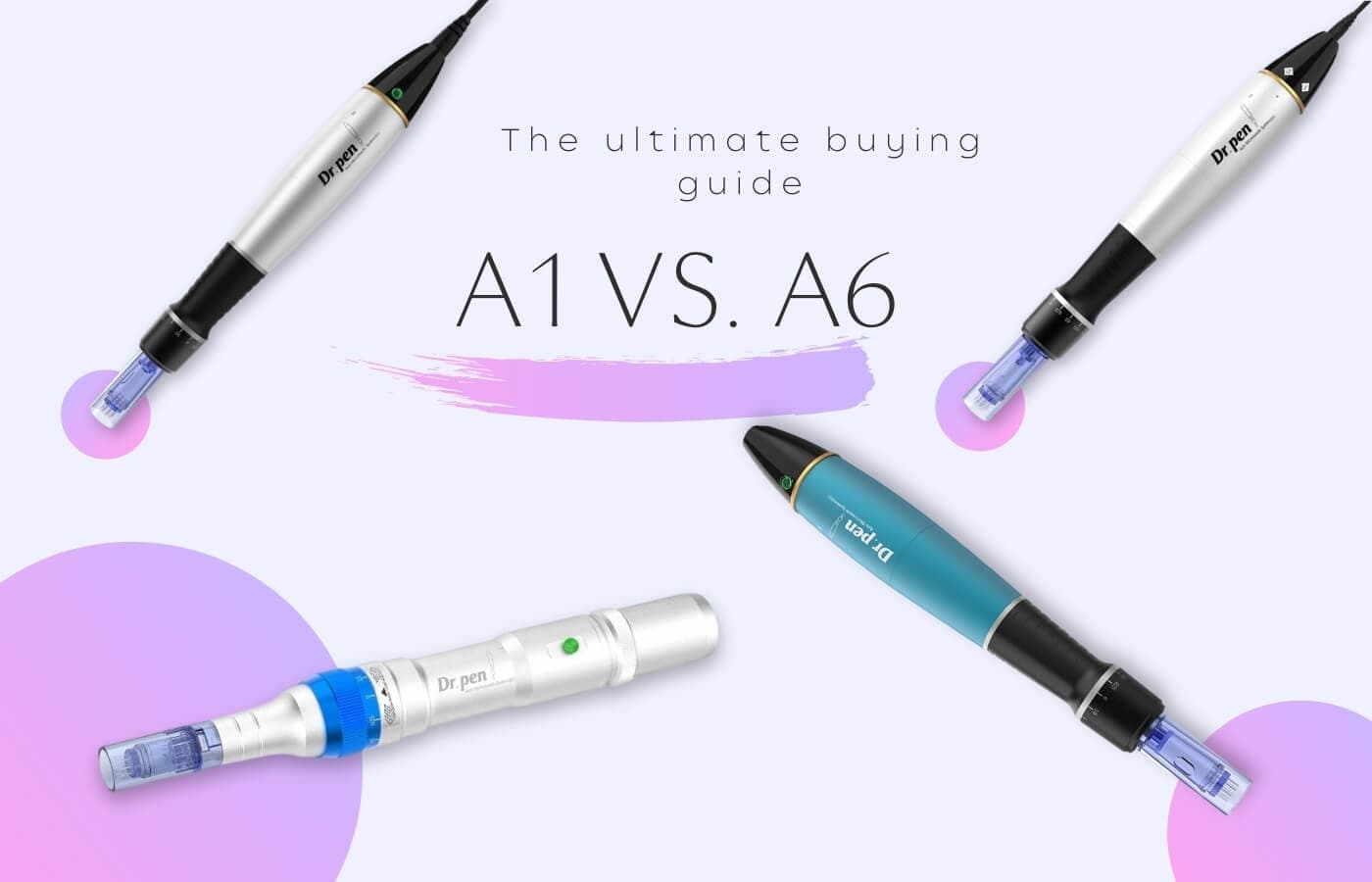
Both Dr. Pen A1 and A6 come with two 12-needle heads in their original packaging and offer a 16-needle head type. They both feature 5 adjustable speed levels, offer wireless and wired modes, are equipped with a built-in rechargeable battery with a capacity of 500mAh, and have a metal body structure. Their biggest difference lies in the fact that Dr. Pen A6 comes with an additional replaceable rechargeable battery, whereas A1 does not. Furthermore, the adjustable needle length for Dr. Pen A1 ranges from 0 to 3.0mm, while for A6, it ranges from 0 to 2.5mm. If you have already decided to purchase one of them, how should you make the choice?
On this page▾
If you’re comparing the Dr. Pen A1 and A6, you probably already know the brand. Still, a quick overview: Dr. Pen is an automatic microneedling device from a Chinese brand, manufactured by Guangzhou Ekai Electronic Technology Co., Ltd.
Most sales go through agents and wholesalers rather than the company directly. That’s why the same model can carry different prices — agents get different factory prices, and each distributor adds its own services on top.
Because of the brand’s reach, counterfeits do circulate — cartridges especially. Buy from a reputable channel.
How Does Dr. Pen Work?
A Dr. Pen has two parts: the electric handle — available wireless or wired for both the A1 and A6, powered by a socket or a built-in rechargeable battery — and the cartridges, each holding a different number of micro-needles. Slot a cartridge into the handle and the device is ready.
The internal motor drives the needles up and down rapidly. When the tip meets the skin, it creates tiny punctures that trigger the skin’s own repair response, prompting new collagen. Those punctures also act as microchannels, carrying the topical you’re using into deeper layers and making the treatment noticeably more effective. Because the needles oscillate so fast, the tip glides across the skin rather than snagging or tearing it.
Dr. Pen A1 & A6 Compared
So where do the A1 and A6 line up, and where do they diverge? Here’s the full side-by-side.
| Feature | Dr. Pen A6 | Dr. Pen A1 |
|---|---|---|
| Disposable cartridges | 2 pcs, 12-pin | 2 pcs, 12-pin |
| Cartridge types | 9 MTS and 7 PMU | 9 MTS and 7 PMU |
| Speed levels | 5 | 5 |
| Adjustable needle length | 0 – 2.5 mm | 0 – 3.0 mm |
| Rechargeable built-in battery | Yes | Yes |
| Spare battery | Two rechargeable batteries | No |
| Battery capacity | 500 mAh | 500 mAh |
| Speed display | No screen (indicator light) | No screen (indicator light) |
| Pen material | Aluminium alloy | Aluminium alloy & silicone |
What They Share
Both ship with two 12-pin cartridges in the box. Both give you 5 adjustable speed levels, both offer wireless and wired modes, both carry a 500 mAh built-in rechargeable battery, and both have a metal body.
The Same Cartridge Range
The A6 and A1 both accept 16 cartridge types: 9 MTS cartridges — 9-pin, 12-pin, 24-pin, 36-pin, 42-pin, plus Nano S, Nano R, Nano 3D, and Nano 5D — and 7 PMU cartridges.
MTS Cartridges
| Cartridge | Specification | Suited to |
|---|---|---|
| 9-pin | Needle Φ 0.25 mm, 304 stainless steel | Acne scars, pitted texture |
| 12-pin | Needle Φ 0.25 mm, 304 stainless steel | Acne scars, pitted texture, wrinkles |
| 24-pin | Needle Φ 0.25 mm, 304 stainless steel | Pitted texture, blemishes, wrinkles |
| 36-pin | Needle Φ 0.25 mm, 304 stainless steel | Acne marks, stretch marks, uneven tone |
| 42-pin | Needle Φ 0.25 mm, 304 stainless steel | Acne marks, stretch marks |
| Nano R | 50 mm², area Φ 8 mm, 304 stainless steel | Painless — foundation, brightening, hydration |
| Nano S | 9 mm², single piece of crystalline silicon | Painless — foundation, brightening, hydration |
| Nano 3D | 9 mm², 7 × 6 rows, crystalline silicon | Painless — foundation, brightening, hydration |
| Nano 5D | 25 mm², 9 × 8 rows, crystalline silicon | Painless — brow area care |
PMU Cartridges
| Cartridge | Configuration | Suited to |
|---|---|---|
| L1 | One dot, stainless steel | Fine hair strokes, lip liner, eyeliner |
| R3 | 3 dots in a triangle, stainless steel | Eyebrow shading, body tattoo |
| F3 | 3 dots in a straight line | Wide lip liner, eyeliner |
| R5 | 5 dots — one centre point with 4 evenly spaced around it | Soft eyebrows, lip contour, pigment work |
| F5 | 5 dots in a straight line | Wider eyeliner, eyebrows, smudged eyeliner, smokey eyes |
| F7 | 7 dots in a straight line | Full lips, eyebrows, wide eyeliner |
| F9 | 9 dots in two rows — 4 on top, 5 on the bottom | Full lips, eyebrows, wide eyeliner |
Both Wired & Wireless
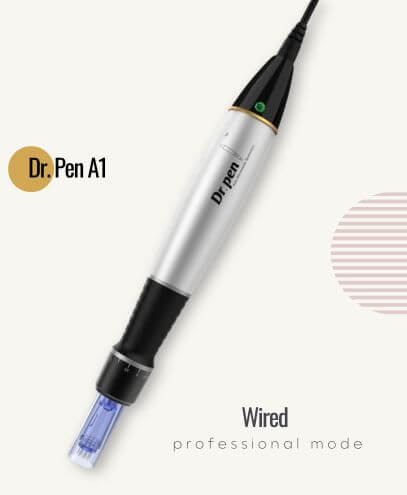
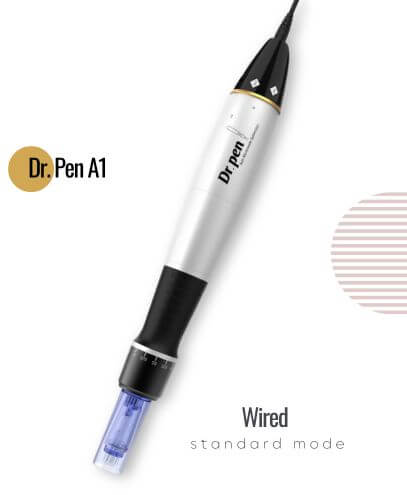
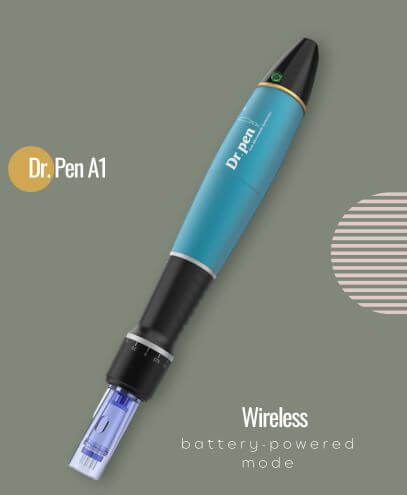
The A6 and A1 both come in wireless and wired versions: A6-C and A6-W, A1-C and A1-W. “C” stands for charging, “W” for wireless.
Worth noting: the A1’s wired version comes in two types, and the difference is how you adjust the speed. On one, you press the button at the end of the pen and the indicator light’s flash rate changes with the speed. On the other, you rotate the end button, which shows a specific speed indicator.


What Makes the A1 Different from the A6?
Two things. The A6 comes with spare replaceable rechargeable batteries; the A1 doesn’t. And the A1’s needle length adjusts from 0 to 3.0 mm, where the A6 tops out at 2.5 mm.

The A6 Has Spare Batteries
Each battery holds 500 mAh, and the A6 comes with 2 replaceable rechargeable batteries — 1,000 mAh of total charge to carry with you, which covers you comfortably outdoors or travelling.
So if battery life matters to you, or you’re often somewhere charging isn’t convenient, the A6 is the one.
The A1 Reaches Deeper
Across the whole Dr. Pen range, the A1 is the only model whose needle length goes up to 3.0 mm. Every other model stops at 2.5 mm.
Different depths do different things. Sensitive skin can work at 0.2 – 0.5 mm, which is essentially painless. To improve how well a topical absorbs, 0.25 – 0.5 mm with moderate pressure over 3 – 5 passes is enough, and the skin won’t look visibly changed afterwards. Working on texture or scarring calls for greater depth — and greater depth means more downtime and more visible marking afterwards.
The area matters as much as the goal. Use shorter depths on sensitive or thin skin; longer depths are for less sensitive areas, typically off the face.
| Area | Guidance |
|---|---|
| Around the eyes | 0.25 mm is advisable. Lift the brow and the upper and lower eyelid skin above the bone surface for better control. |
| Nasolabial & chin-labial folds | Aim at the deeper layer of the fold. Use 1.0 – 1.5 mm and stop there — going further is over-treatment. |
| Neck | 0.5 mm as standard. Depending on wrinkle depth this may go to 1.0 – 2.0 mm. |
| Nose | The surface is irregular, which makes it tricky — bony areas take the needle deeper than you intend, so over-treatment is easy. Use 0.5 – 1.0 mm. Avoid areas over an implant, or use ≤ 0.25 mm with light pressure. |
| Mouth & lips | Very sensitive. Pick a length based on your own tolerance and your goal. This area is prone to uneven pigment and irritation afterwards, so don’t go long — 0.5 – 1.0 mm. |
| Forehead | If the skin is particularly thin, go shorter. 0.5 – 1.0 mm is a reasonable range. |
So what’s 3.0 mm actually for? It has to be handled by a professional, and it’s used for deeper wrinkles, cellulite, stretch marks, body contouring, tattoo fading, and scars.
Final Thoughts
It comes down to two things: battery and depth. If battery life is what you care about, take the Dr. Pen A6. If you need 3.0 mm, take the Dr. Pen A1. And if colour matters — the A6 comes in solid grey, the A1 in black-and-blue or black-and-grey.
Get the skincare edit
New guides and device drops, straight to your inbox.
No spam. Unsubscribe anytime.
Keep reading
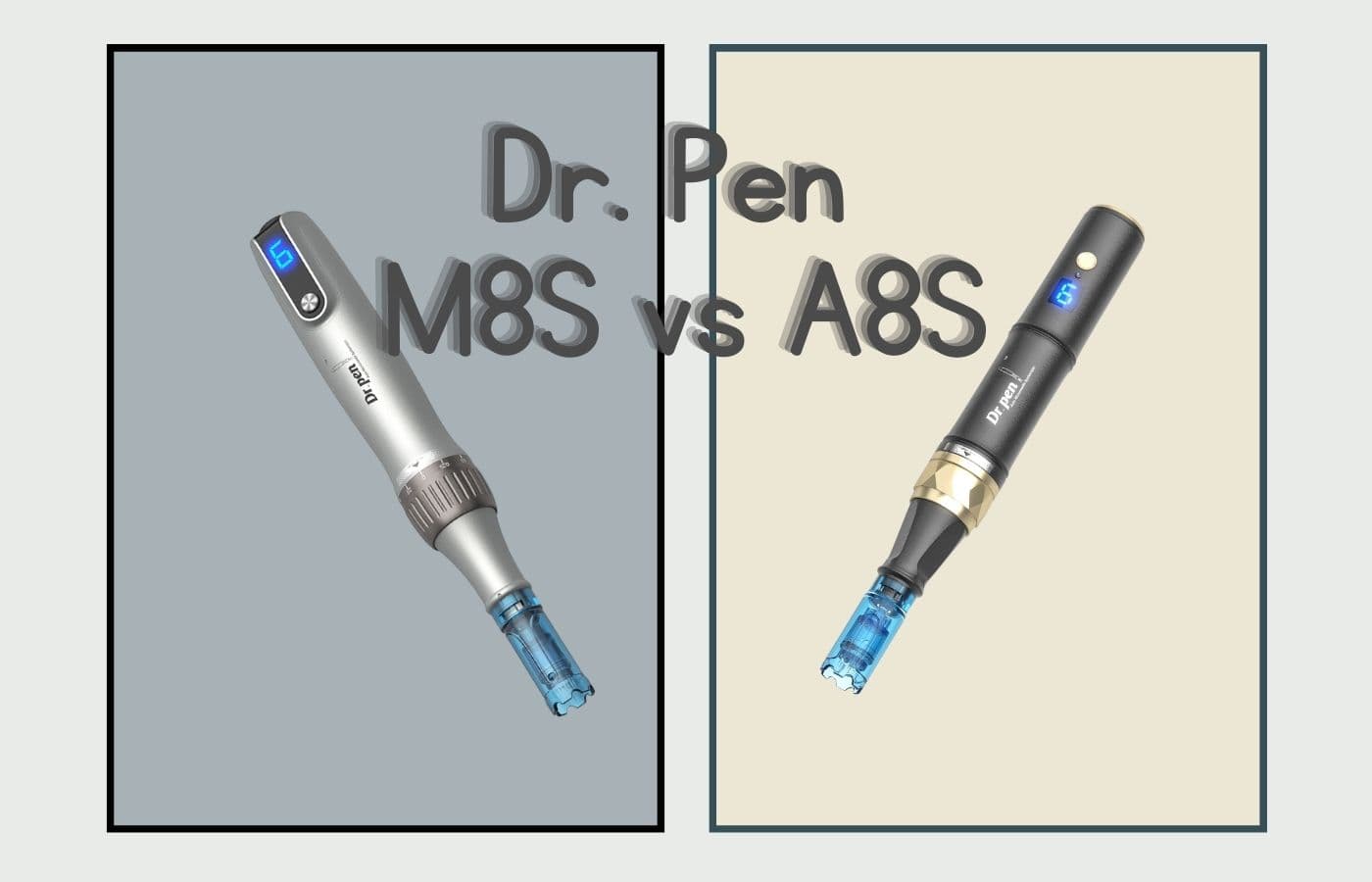
Dr. Pen M8S vs A8S: Which Device Offers the Best Performance?
Discover the ultimate comparison between Dr. Pen M8S and A8S! From performance and battery life to material durability and speed options, find out which microneedling device best suits your needs. Whether you’re a professional or a home user, this guide helps you make the right choice for flawless skin!
Read article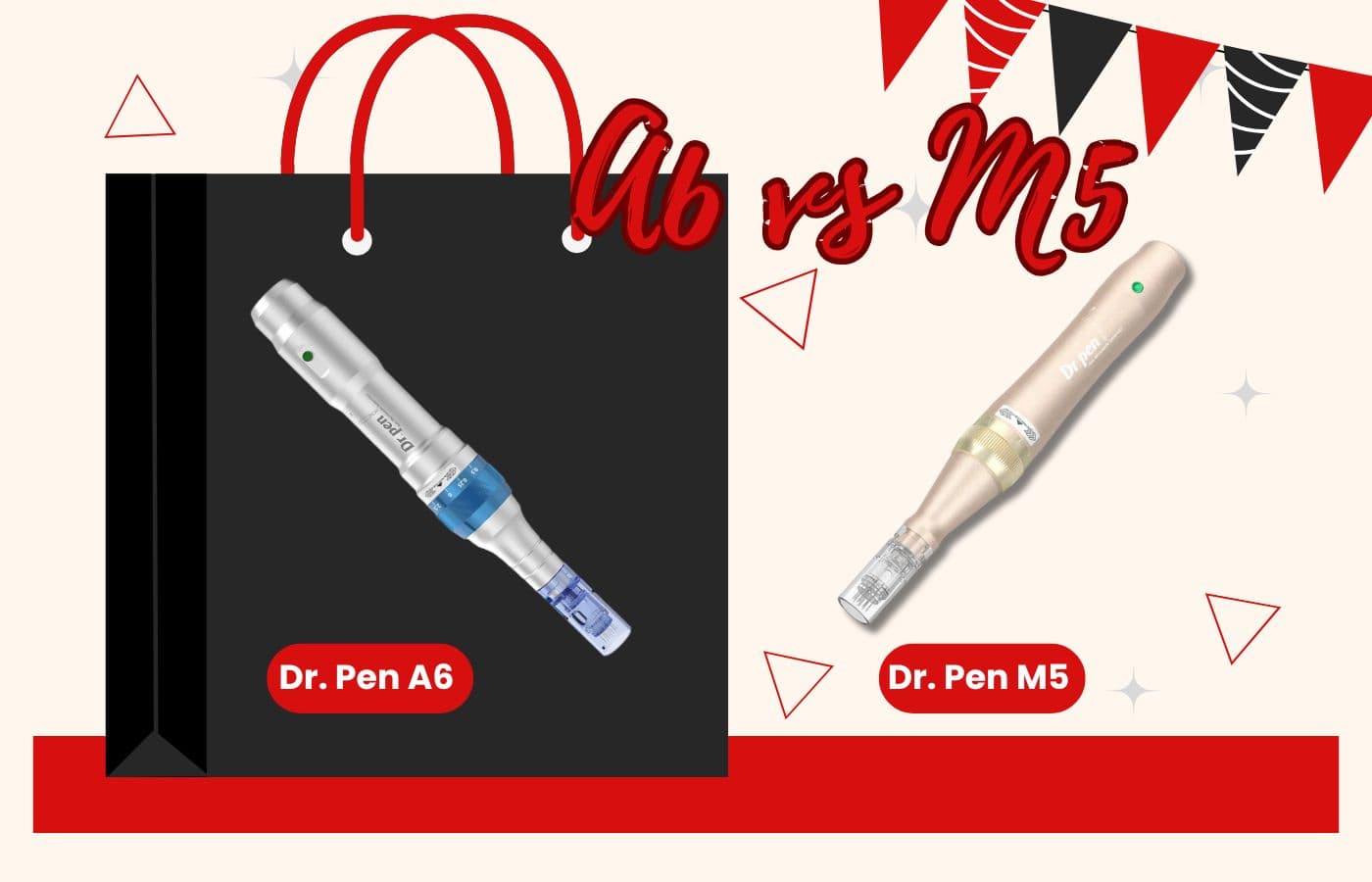
Dr. Pen M5 vs A6: Which Microneedle Pen is Right for You?
Looking to choose between Dr. Pen M5 and A6 for your skincare? This detailed comparison covers the key differences, including speed, battery life, portability, and treatment options. Find the best microneedle pen for your needs, whether for anti-aging, acne scars, or semi-permanent makeup!
Read article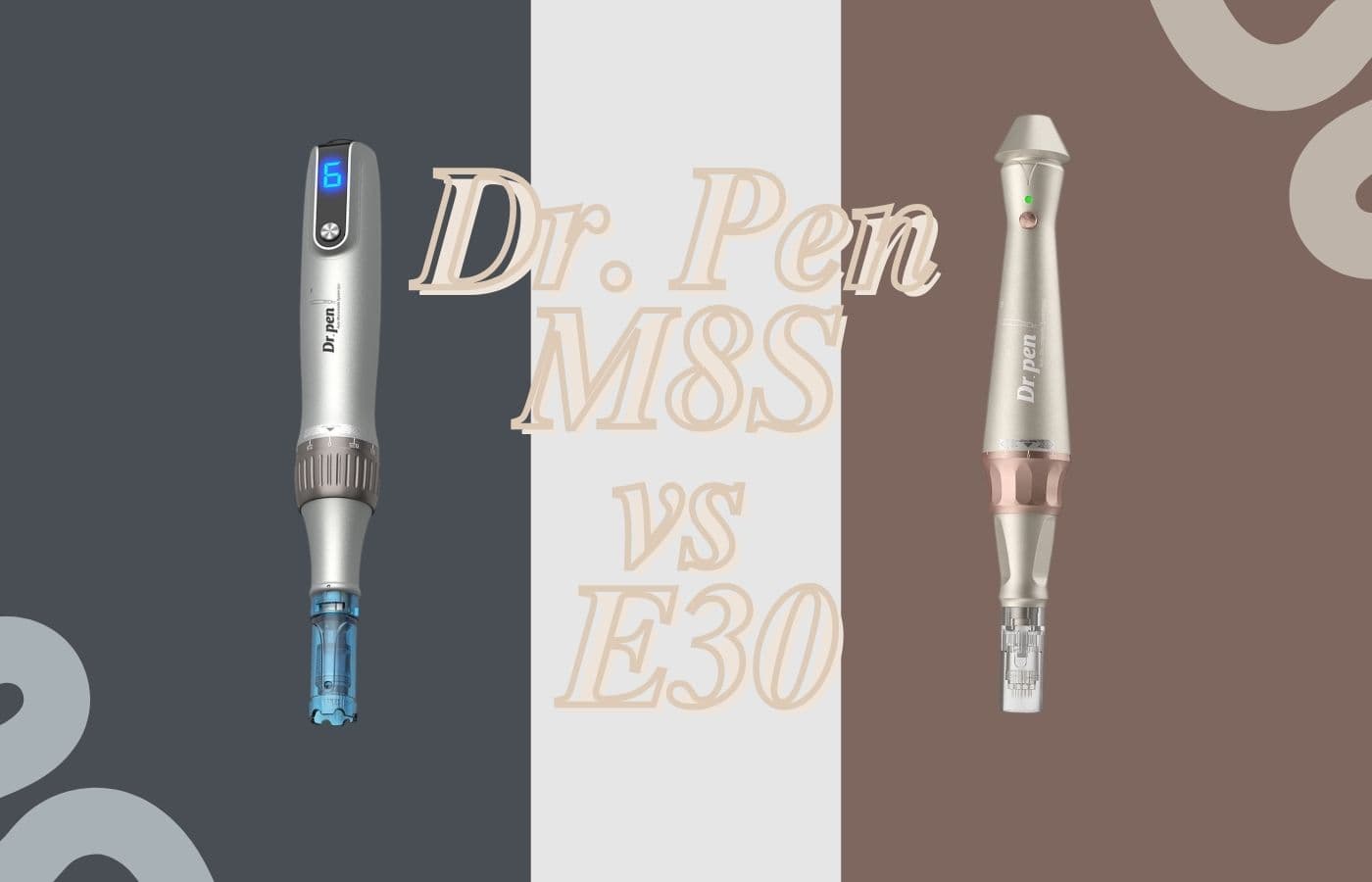
Dr. Pen M8S vs E30: Compare Features to Choose the Right One
Dr. Pen M8S vs. E30: Compare the two leading microneedling devices for skincare. Discover the differences in design, performance, precision, and battery life to find the perfect choice for your needs, whether you’re a professional or a home user. Choose wisely for radiant, healthy skin!
Read article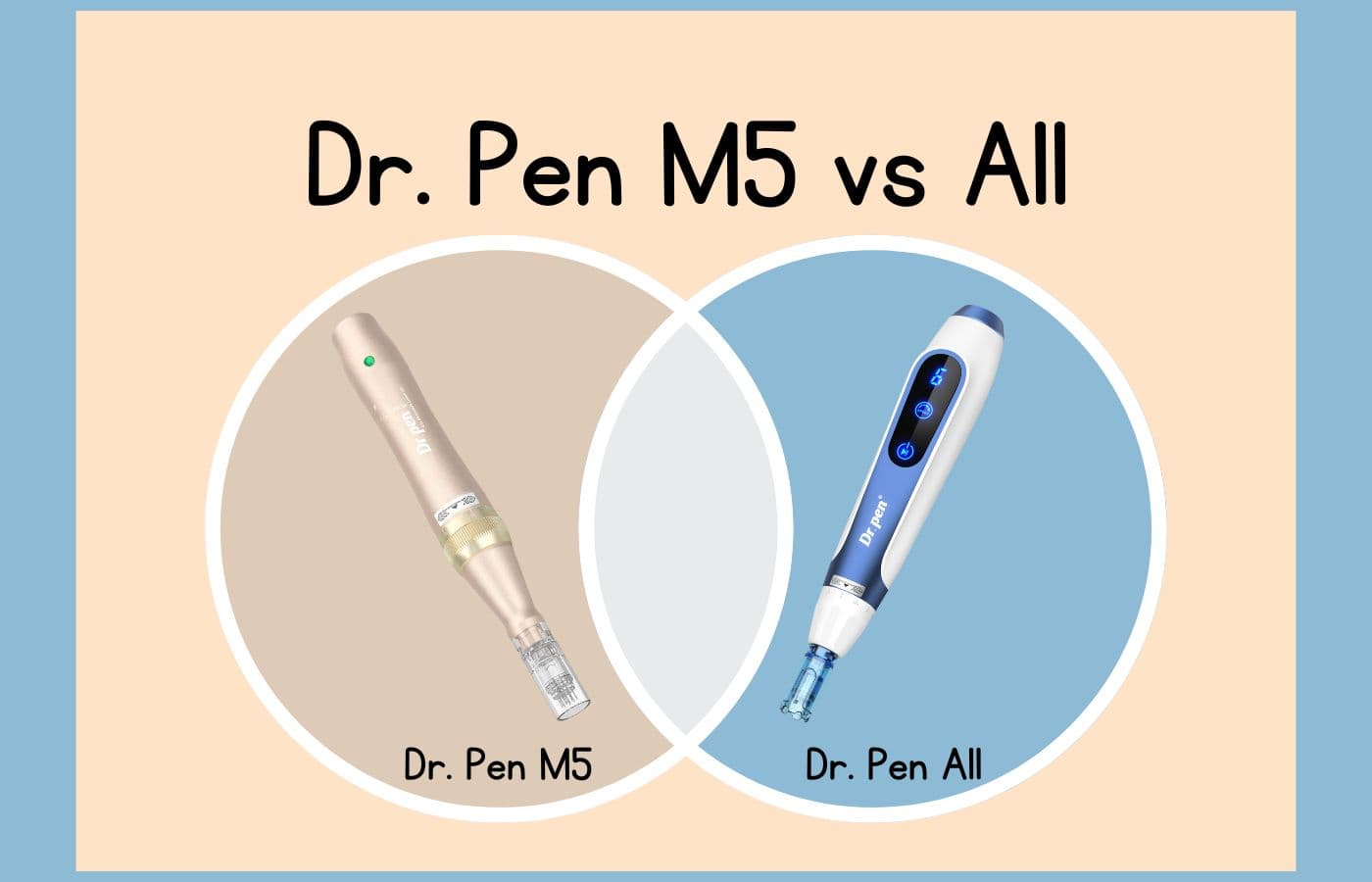
Dr. Pen M5 vs A11: Which Microneedling Device is Right for You?
Wondering whether to choose the Dr. Pen M5 or A11? Our detailed comparison explores key differences in design, performance, battery life, adjustability, and more. Find the perfect microneedling device for your skin care needs—whether you’re a professional or home user!
Read article